Enzymes for RTD Tea Extraction and Clarity
BrixPilot helps ready-to-drink tea plants turn variable botanical raw material into cleaner, more repeatable finished beverages. As an enzyme supplier for beverage manufacturing, we focus on production outcomes that matter on the line: improved extraction yield, lower haze load, controlled mouthfeel, easier filtration and tighter batch-to-batch consistency.
Tea is not a simple infusion at factory scale. Leaf cut, origin, seasonal variation, extraction temperature, tannin balance, polysaccharides and suspended fine particles can all shift the result. The right enzyme strategy can make the process more forgiving without stripping the beverage of its intended character.
Built for RTD tea production challenges
BrixPilot enzyme solutions are selected for beverage manufacturers dealing with:
- Haze development during cooling, blending or storage
- Sediment rings and settled botanical fines
- Low soluble extraction from tea leaf or blended botanicals
- Heavy body or inconsistent viscosity after extraction
- Slow clarification or filtration bottlenecks
- Mouthfeel drift between production campaigns
- Formulation sensitivity in sweetened, acidified or functional tea drinks
We work with black tea, green tea, oolong-style beverages, herbal tea bases, fruit-tea hybrids, lightly sweetened RTD tea and premium cold-fill or hot-fill concepts.
What enzyme processing can improve in RTD tea
Higher soluble extraction
Cell wall-targeting enzyme systems can help release soluble tea components from plant material more efficiently. This supports better use of raw material, more consistent Brix contribution and improved extraction economics when leaf quality or botanical blends vary.
Cleaner visual clarity
Pectin, hemicellulose, starch-like residues, proteins and fine plant particles can contribute to turbidity or delayed haze. BrixPilot helps match enzyme functionality to the likely haze drivers in your process so clarification improves without over-processing the beverage.
Controlled viscosity and mouthfeel
Some tea bases develop a heavy or uneven body after extraction, concentration, botanical blending or sweetener addition. Enzyme treatment can reduce unwanted viscosity, improve pumpability and maintain a cleaner drinking profile while preserving the planned sensory direction.
Faster downstream handling
Reducing suspended load before separation can support more predictable filtration, centrifugation or membrane performance. For plants running high-speed RTD lines, that means fewer process surprises between extraction, blending, stabilization and filling.
Enzyme options for tea beverage factories
BrixPilot can recommend single-function or blended enzyme systems depending on the tea base and processing goal.
Pectinase systems
Used where botanical pectins contribute to haze, viscosity or clarification difficulty, especially in tea-fruit blends, herbal infusions and plant-rich extracts.
Cellulase and hemicellulase systems
Selected to improve release from tea leaf and botanicals by targeting structural plant fibers that restrict extraction or carry suspended solids into the finished base.
Tannase-based approaches
Considered when tannin-related haze, bitterness management or tea polyphenol interactions are part of the formulation challenge. Application depends on product style and sensory targets.
Amylase support
Useful when starch-like residues or grain, botanical or inclusion-derived components are suspected contributors to turbidity or body shift.
Protease support
Applied selectively when protein-polyphenol interactions or ingredient blends create haze risk. We evaluate carefully because sensory balance matters in tea.
Where enzymes fit in the RTD tea process
BrixPilot helps your technical team position enzyme treatment around the process you already run. Common integration points include:
- Botanical extraction or steeping stage
- Post-extraction holding prior to separation
- Tea concentrate preparation
- Pre-clarification conditioning
- Blend base preparation before sweetener, acid or flavor addition
The goal is not to complicate your line. The goal is to make extraction and clarification more predictable with a practical treatment window your operators can control.
A practical development workflow
1. Define the production problem
We start with the operational symptom: haze after cooling, sediment after storage, filtration slowdown, low extraction yield, heavy body, or inconsistent Brix contribution.
2. Review process conditions
Your team provides the key process context: tea type, extraction profile, pH range, thermal steps, hold time, separation method, formulation sequence and finished beverage target.
3. Match enzyme function to the root cause
BrixPilot recommends an enzyme direction based on likely substrate contribution and process compatibility, not a generic catalog selection.
4. Run bench and pilot comparisons
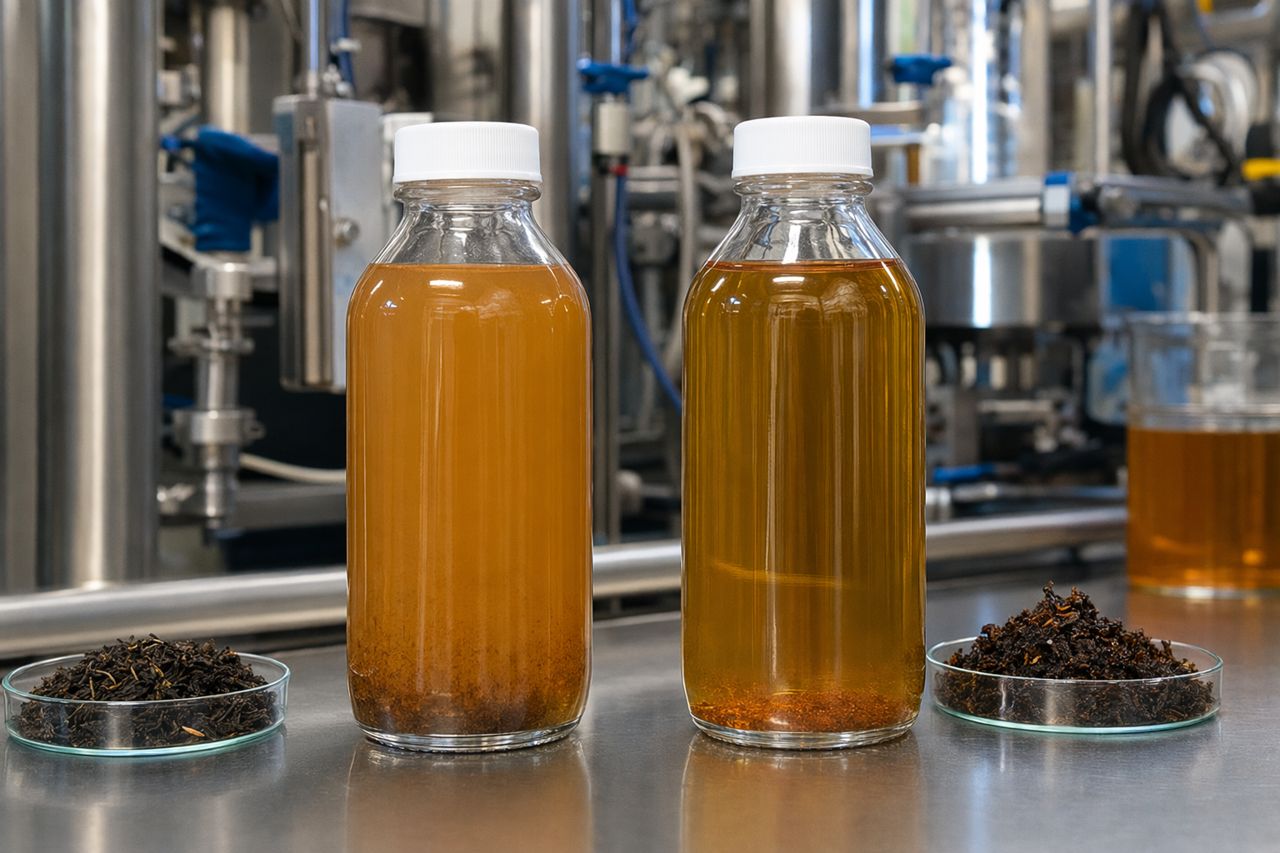
We help structure practical trials that compare treated and untreated tea bases for clarity, sediment, soluble yield, viscosity, sensory impact and downstream handling.
5. Scale with operator-friendly controls
Once the enzyme route is validated, we support scale-up guidance for dosing logic, addition point, mixing, hold strategy and process checks.
Commercial value for RTD tea plants
A well-matched enzyme program can help beverage manufacturers:
- Increase extract value from tea leaf and botanicals
- Reduce avoidable losses during clarification
- Improve visual quality in clear and lightly cloudy RTD teas
- Reduce sediment complaints and quality holds
- Stabilize mouthfeel across raw material variation
- Improve filtration predictability and line efficiency
- Support premium product positioning with cleaner appearance
- Shorten development cycles for new tea-based beverages
Designed for repeatable formulation, not one-off fixes
RTD tea plants need consistency across procurement seasons, production teams and line schedules. BrixPilot supports enzyme selection with a formulation mindset: the chosen system should protect the beverage profile, work inside real plant constraints and help QA teams make confident release decisions.
That means we look beyond a single haze reading. We consider processing sequence, ingredient interactions, storage behavior, sensory target, label expectations and the economics of the finished product.
Request a quote
Tell us what your RTD tea line is trying to improve: extraction yield, clarity, sediment control, viscosity, filtration speed or formulation repeatability. Use the on-site request a quote form and include your tea type, process stage, current challenge and target outcome. BrixPilot will respond with a practical enzyme recommendation for your beverage manufacturing process.