Functional Beverage Ingredients That Complicate Clarification
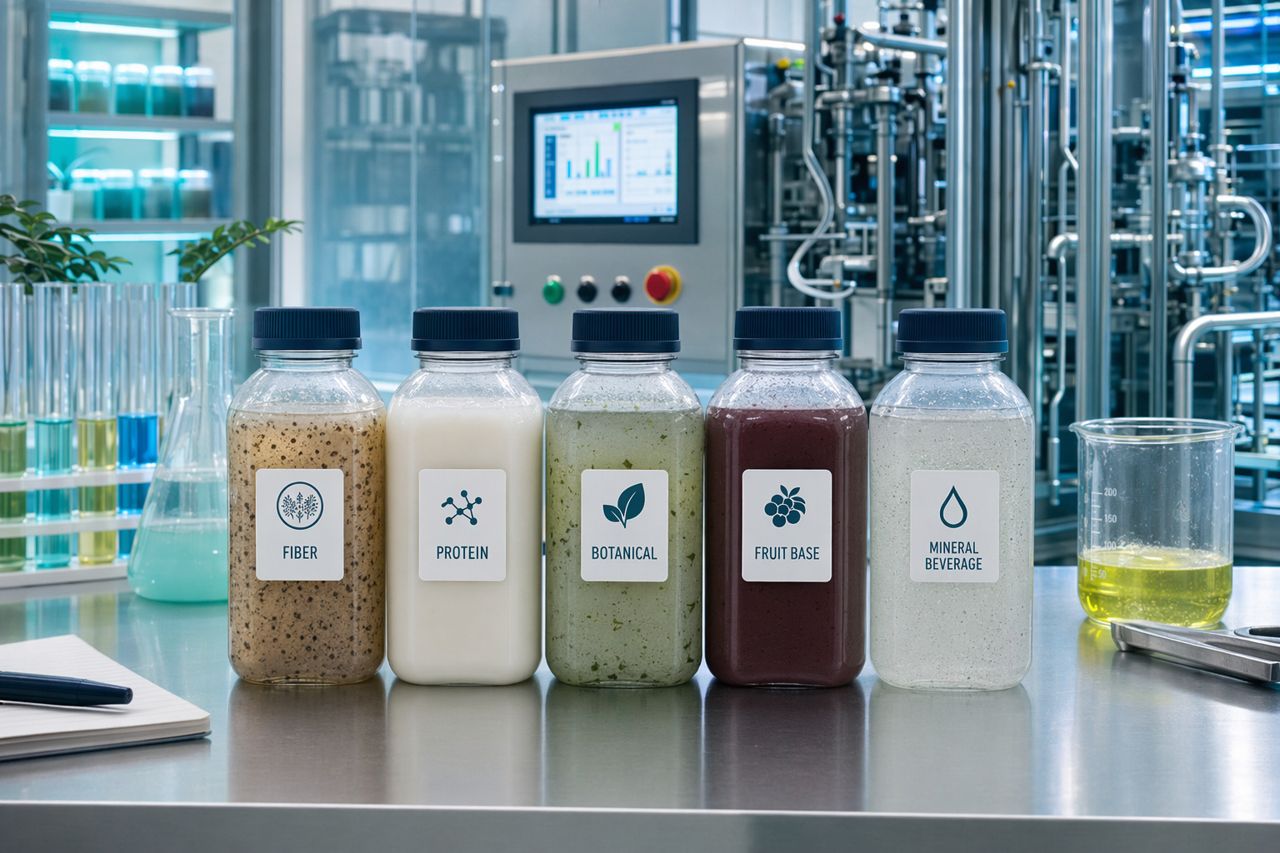
Functional RTD beverages are engineered to do more than taste good. They carry fiber, protein, botanical extracts, minerals, fruit solids, stabilizers, sweetener systems, and texture modifiers through a high-speed process that still has to deliver clean appearance, controlled mouthfeel, stable suspension, and repeatable filling behavior.
That is where clarification becomes less of a single filtration step and more of a formulation-and-process decision.
As an enzyme supplier for beverage manufacturing, BrixPilot works with RTD teams to identify which ingredient systems are driving haze, viscosity, sediment, yield loss, or inconsistent line performance — then match enzyme strategies to the actual production constraint.
Why functional ingredients make clarification harder
Traditional beverage clarification often focuses on fruit pectin, suspended pulp, or simple turbidity reduction. Functional beverages introduce more variables:
- Multiple plant-derived solids with different particle sizes
- Soluble and insoluble fibers that bind water and increase viscosity
- Proteins that interact with polyphenols, minerals, acids, and heat
- Starches and dextrins that thicken, haze, or settle over time
- Gums and hydrocolloids that protect texture but slow separation
- Botanical extracts that contribute tannins, pigments, and fine particulates
- Mineral systems that create clouding, precipitation, or chalky mouthfeel
The commercial impact is practical: slower clarification, higher filter loading, unstable appearance, inconsistent mouthfeel, reduced extraction efficiency, more rework, and longer R&D cycles.
1. Fibers: useful on label, difficult in process
Added fibers are common in wellness RTDs, gut-health drinks, meal-replacement formats, and reduced-sugar beverages. They can improve nutrition positioning and mouthfeel, but they also change the way liquid moves through the plant.
Typical clarification challenges
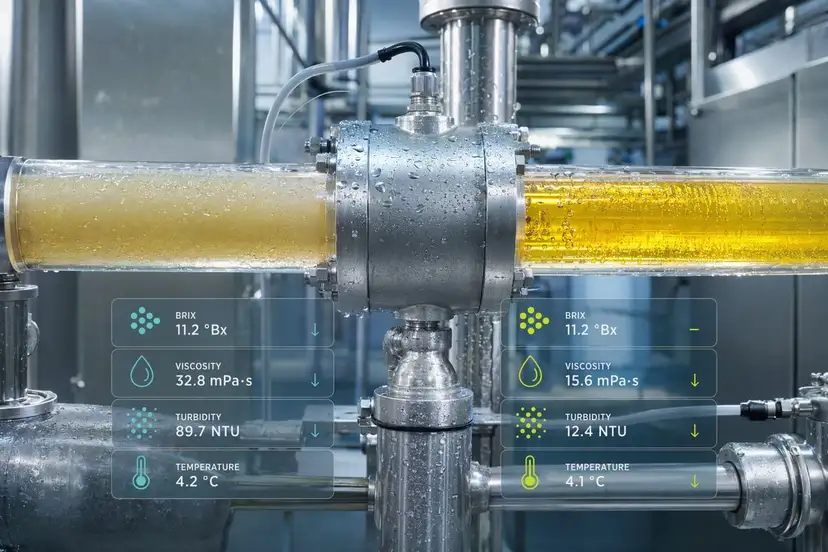
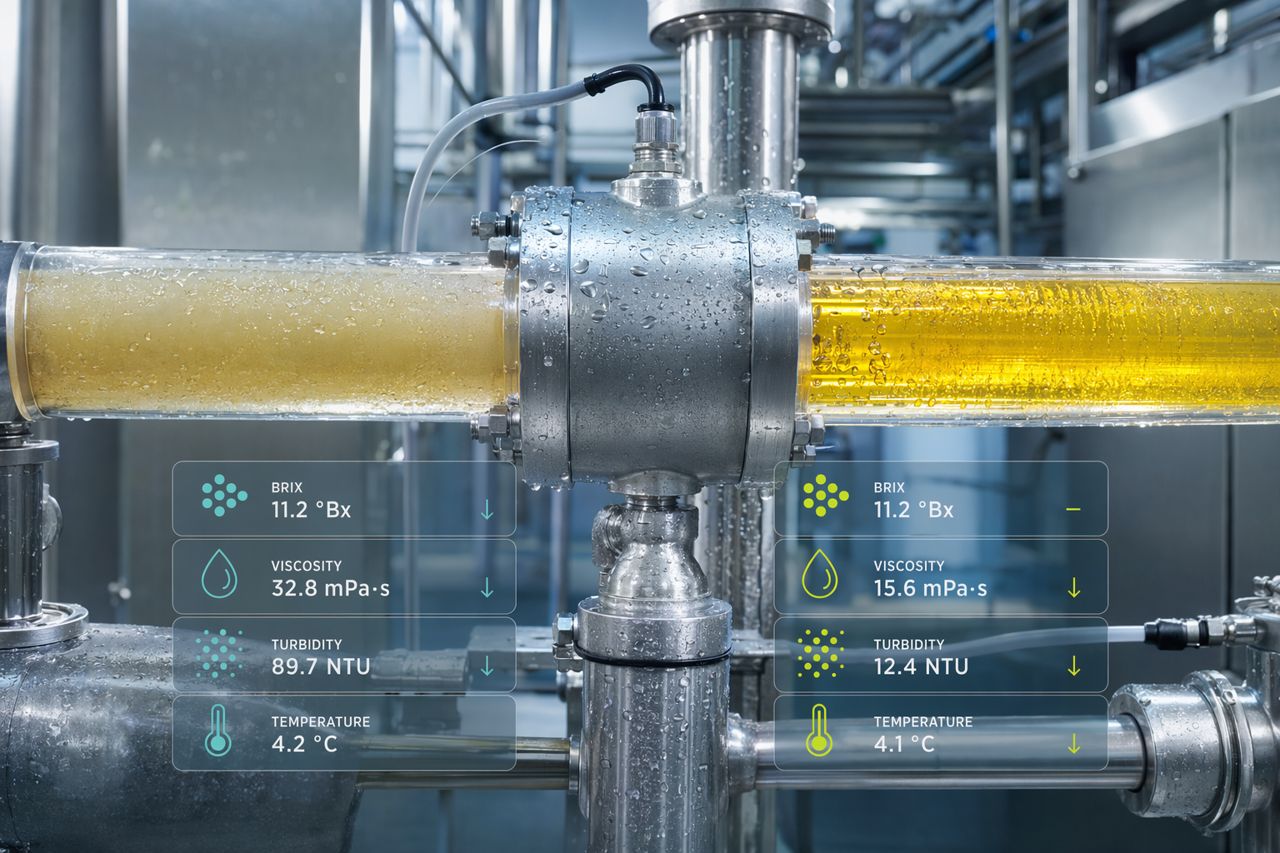
- Elevated viscosity that slows transfer, mixing, and filtration
- Persistent fine haze from partially soluble fiber fractions
- Sediment or ring formation during shelf life
- Increased hold time before target clarity is reached
- Greater variation between ingredient lots
What R&D and production teams should watch
Fiber systems can behave differently depending on pH, temperature, shear, fruit acid profile, and mineral load. A formula that looks stable at bench scale may create excessive pressure rise or sluggish separation at plant scale.
Enzyme selection can help reduce viscosity, improve flow behavior, and support cleaner separation without stripping the beverage of its intended body.
2. Proteins: nutrition value with stability tradeoffs
Protein RTDs are especially sensitive because the protein system is never acting alone. It interacts with acid, heat, minerals, flavors, sweeteners, and plant polyphenols.
Common problem signs
- Haze increase after heat treatment
- Fine sediment after storage
- Grainy or chalky mouthfeel
- Flocculation when fruit or botanical components are added
- Batch-to-batch differences in appearance and texture
Practical implication
Protein systems may need both formulation control and process support. The goal is not always maximum clarification. In many RTD concepts, the goal is a controlled visual profile: bright, uniform, pourable, and stable enough for the target pack format.
BrixPilot helps teams evaluate whether protein-driven instability is enzymatically addressable, formulation-driven, or caused by ingredient incompatibility.
3. Starches and dextrins: hidden viscosity drivers
Starch-based materials, maltodextrins, cereal extracts, grain bases, and certain plant ingredients can add body or solids while quietly increasing processing load.
Where they create trouble
- High viscosity during extraction or blending
- Slow clarification due to suspended starch fractions
- Haze that returns after cooling
- Increased energy demand during pumping and heat exchange
- Reduced throughput when filtration becomes the bottleneck
Enzyme opportunity
Targeted enzyme use can reduce viscosity and improve extract handling, especially where starch-like fractions interfere with line efficiency or final beverage clarity. For commercial teams, this can mean faster processing, better yield, and fewer compromises between texture and manufacturability.
4. Gums and hydrocolloids: mouthfeel control versus line speed
Gums and stabilizers are often added for suspension, body, and sensory quality. They can be essential to a premium drinking experience, but overbuilt stabilizer systems can create avoidable manufacturing friction.
Clarification and processing effects
- Slower deaeration and separation
- Increased foaming during mixing or transfer
- Higher apparent viscosity at filling temperature
- More difficult filtration behavior
- Masking of haze sources during development
Commercially practical approach
The question is not whether gums are good or bad. The question is whether the stabilizer system is doing more work than the beverage needs. Enzymatic viscosity management can sometimes improve processability, but the formulation must preserve the intended mouthfeel and shelf stability.
5. Botanicals: small dose, big haze potential
Botanical extracts bring flavor complexity, color, functional positioning, and consumer appeal. They also bring polyphenols, tannins, pigments, waxes, and fine plant solids that can destabilize a clear or lightly cloudy RTD.
Frequent issues
- Polyphenol-protein haze
- Darkening or color shift during storage
- Fine particulate suspension that resists settling
- Extract lot variability
- Interaction with acidulants, minerals, and sweeteners
Development note
Botanical beverages benefit from early compatibility screening. If an extract contributes value to the label but creates turbidity, the team needs to know whether the issue is particle load, polyphenol interaction, pectin-like material, or mineral sensitivity.
6. Fruit bases: natural appeal, variable composition
Fruit bases, purées, concentrates, and NFC ingredients are central to many RTD concepts. They also bring pectin, cellulose, hemicellulose, pulp fines, starch-like fractions, and seasonal variation.
Clarification pressure points
- Persistent pectin haze
- High pulp load and reduced juice yield
- Cloud instability over shelf life
- Slower filtration and higher solids retention
- Viscosity swings across crop or supplier lots
Where enzyme systems help
Fruit-based RTDs often benefit from enzyme strategies that support extraction yield, viscosity reduction, and clarification consistency. The value is not only a brighter beverage. It is a more repeatable process with fewer surprises at scale.
7. Mineral systems: essential claims, difficult compatibility
Electrolyte, hydration, fortified, and wellness beverages often rely on mineral systems for functional positioning. Calcium, magnesium, iron, zinc, and other minerals can create solubility and sensory challenges.
Typical failure modes
- Clouding after mineral addition
- Precipitation over time
- Chalky or metallic mouthfeel
- Interaction with proteins, pectins, and botanical polyphenols
- Increased turbidity after heat or pH adjustment
What to evaluate
Mineral-driven haze is not always an enzyme problem. However, enzymes can reduce the contribution of plant-derived haze precursors that make mineral compatibility worse. The right diagnostic work separates true precipitation from haze caused by polysaccharides, proteins, or suspended solids.
A practical clarification checklist for RTD teams
Before changing filter media, adding more stabilizer, or accepting a cloudy finish, evaluate the ingredient system in order.
Formulation inputs
- Which ingredient contributes the largest solids load?
- Which component changes viscosity the most?
- Are proteins, minerals, or botanicals interacting after heat or acidification?
- Does haze appear immediately, after cooling, or during storage?
- Is the visual target clear, bright, uniform cloud, or controlled opacity?
Process inputs
- Where does pressure rise first?
- Which step creates the longest hold time?
- Does transfer behavior change between pilot and production scale?
- Are yield losses tied to retained solids or slow separation?
- Does the same formulation behave differently across ingredient lots?
Commercial inputs
- Is the issue reducing line speed?
- Is rework increasing cost per batch?
- Is shelf-life appearance affecting customer acceptance?
- Is the plant over-processing to compensate for uncertain formulation behavior?
- Can a targeted enzyme step protect quality while simplifying production?
How BrixPilot supports clarification decisions
BrixPilot helps beverage manufacturers connect ingredient behavior to production outcomes. Our work focuses on the practical interface between formulation, process conditions, and enzyme selection.
Typical project goals
- Reduce viscosity before separation or filling
- Improve clarity without flattening sensory character
- Increase extraction yield from fruit or plant bases
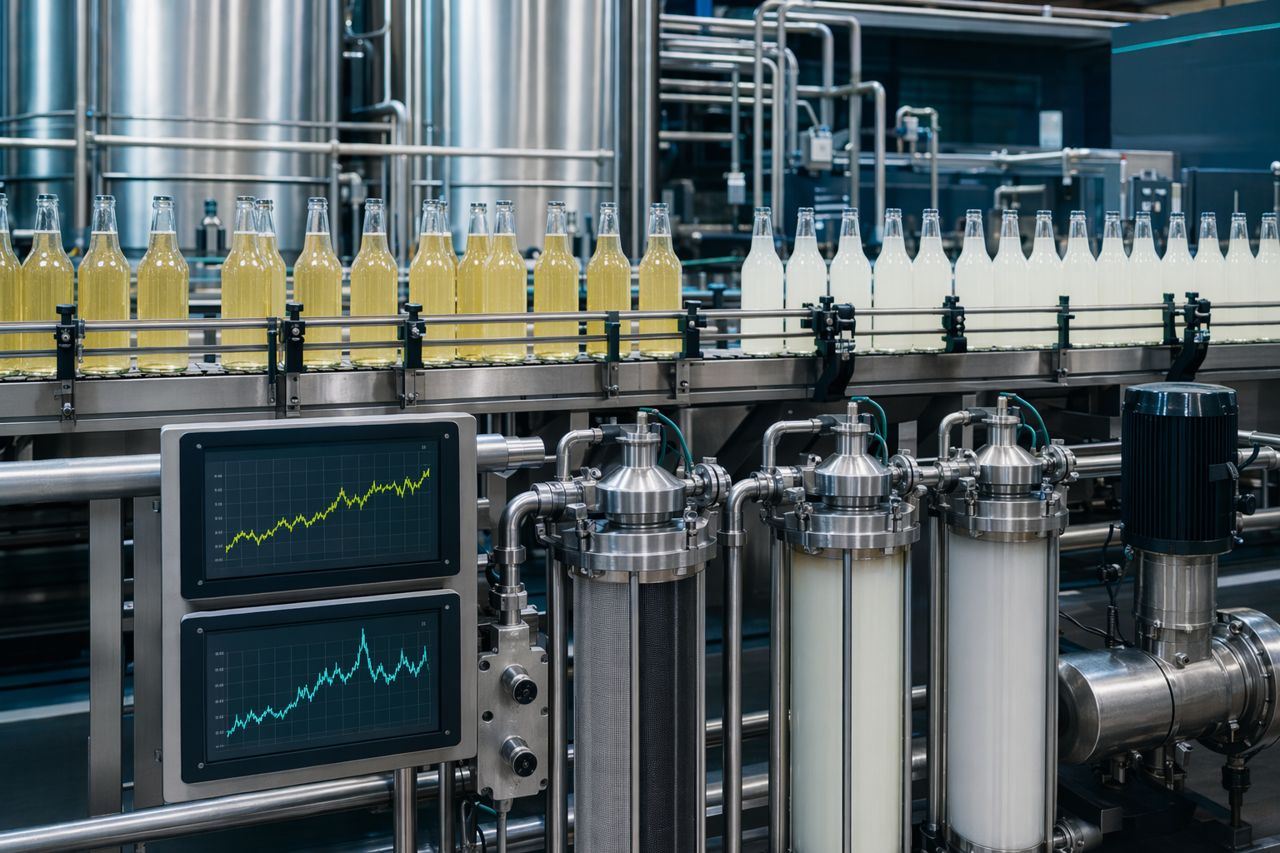
- Improve filterability and line efficiency
- Stabilize appearance across production lots
- Support repeatable scale-up from pilot to plant
The key principle: clarify the cause before clarifying the beverage
Functional ingredients are not interchangeable haze sources. Fiber haze behaves differently from protein-polyphenol haze. Pectin-driven viscosity is different from gum-driven mouthfeel. Mineral precipitation is different from suspended fruit solids.
A practical enzyme program starts with the real constraint: clarity, mouthfeel control, viscosity reduction, extraction yield, line efficiency, or formulation repeatability.
When the cause is clear, the process path becomes simpler.
Request a quote
Planning a functional RTD launch, reformulation, or plant-scale clarification improvement? Share your beverage type, key ingredients, target appearance, and current production constraint through the on-site request form. BrixPilot will help you identify the enzyme approach that fits the formulation and the factory reality.
Request a quote