The RTD Functional Drink Plant Checklist: From Incoming Botanicals to Finished Beverage
Functional beverages are won or lost on repeatability. A formula that looks clean in the pilot room can behave differently when botanicals vary, pulp load shifts, or the filler is waiting on a slow clarification step.
BrixPilot supports ready-to-drink beverage factories with enzyme systems built around practical production outcomes: better extraction yield, controlled mouthfeel, lower viscosity, faster separation, cleaner color, and more predictable line performance.
BrixPilot as an enzyme supplier for beverage manufacturing
The right enzyme program should not feel like a lab curiosity. It should help the plant hit commercial targets:
- Reduce batch-to-batch variation from botanical and fruit inputs
- Improve liquid recovery from high-solids extracts
- Manage haze, sediment, and viscosity before they become filling issues
- Protect desired mouthfeel without over-thinning the beverage
- Support clearer filtration, centrifugation, and thermal processing decisions
- Give R&D, production, and QA a shared operating language
This checklist is designed for R&D managers, process engineers, and plant teams scaling ready-to-drink functional beverages from raw ingredient receiving through finished-pack release.
1. Incoming botanicals, fruit bases, and functional solids
What to verify at receiving
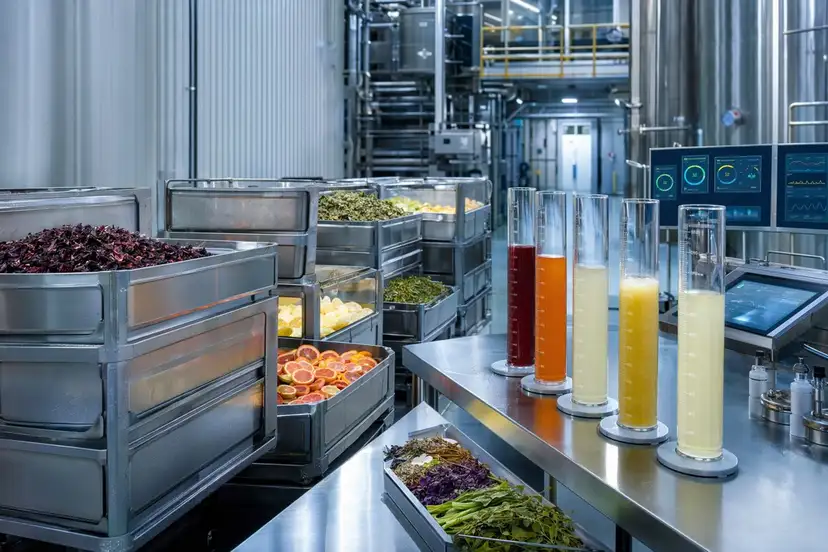
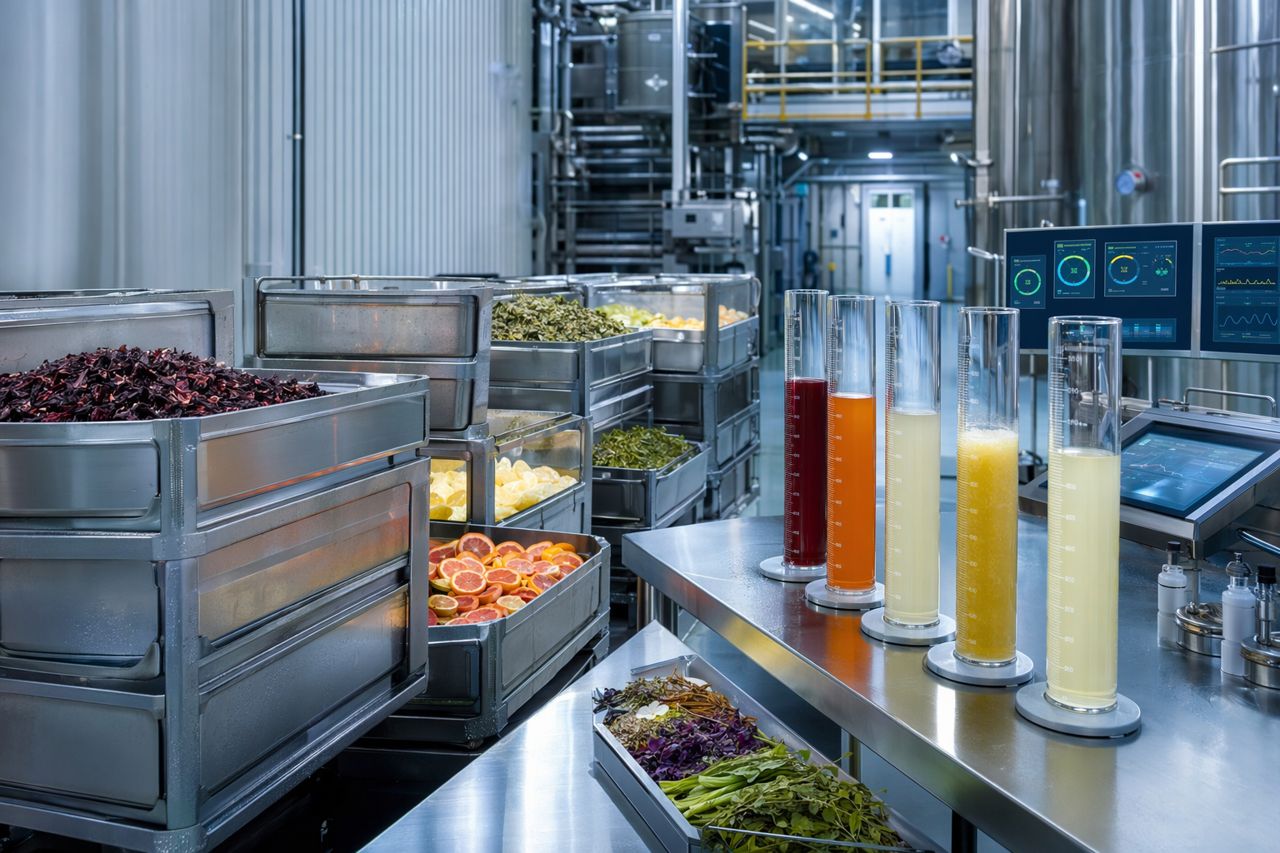
Functional beverage inputs are rarely uniform. Botanicals, fruit purées, concentrates, grains, seeds, roots, fibers, and plant proteins can change with origin, crop season, supplier handling, and storage age.
Check:
- Supplier lot identity and documentation
- Moisture condition and visible clumping in dry botanicals
- Aroma deviations, oxidation notes, or fermented character
- Pulp load, fiber content, and insoluble solids in fruit bases
- Color intensity and browning tendency
- Baseline brix, pH, turbidity, and viscosity
- Known process inhibitors such as high tannin load, oils, gums, or suspended fine particles
Where enzymes can help
Enzymes are not a substitute for incoming material control. They are a tool for reducing the processing penalty caused by natural variation.
Typical targets include:
- Pectin breakdown for fruit-based viscosity reduction and clarification
- Cell wall opening for improved botanical extraction yield
- Starch or dextrin management in grain-adjacent beverage systems
- Protein and polysaccharide behavior control where haze or sediment is predictable
- Fiber modification where mouthfeel needs to remain smooth rather than gritty
Plant question: Which raw material attribute most often slows the line: haze, viscosity, poor extraction, sediment, or inconsistent mouthfeel?
2. Pre-processing and size reduction
Before extraction, milling or chopping changes how quickly water contacts the ingredient. It also changes how much fine material enters the downstream process.
Checklist
- Confirm particle size target by ingredient class
- Avoid excessive fines that overload separation
- Track slurry viscosity after hydration
- Confirm agitation is sufficient without creating foam problems
- Keep hold times consistent between batches
- Record temperature and pH before enzyme addition
Practical enzyme consideration
Enzyme performance depends on access. A well-hydrated botanical matrix usually responds more predictably than a dry, floating, poorly wetted material bed. If the plant is seeing inconsistent yield, the issue may be hydration and particle dispersion before it is enzyme selection.
3. Extraction: yield without dragging problems downstream
Extraction is where commercial value is often created. It is also where the plant can accidentally transfer too much viscosity, haze-forming material, bitterness, or sediment into the beverage stream.
Extraction control points
- Water-to-solid ratio
- Hydration time
- Temperature profile
- pH window
- Agitation intensity
- Enzyme contact time
- Solids removal method
- Extract color and aromatic retention
- Recovery yield versus downstream clarity
Enzyme-enabled outcomes
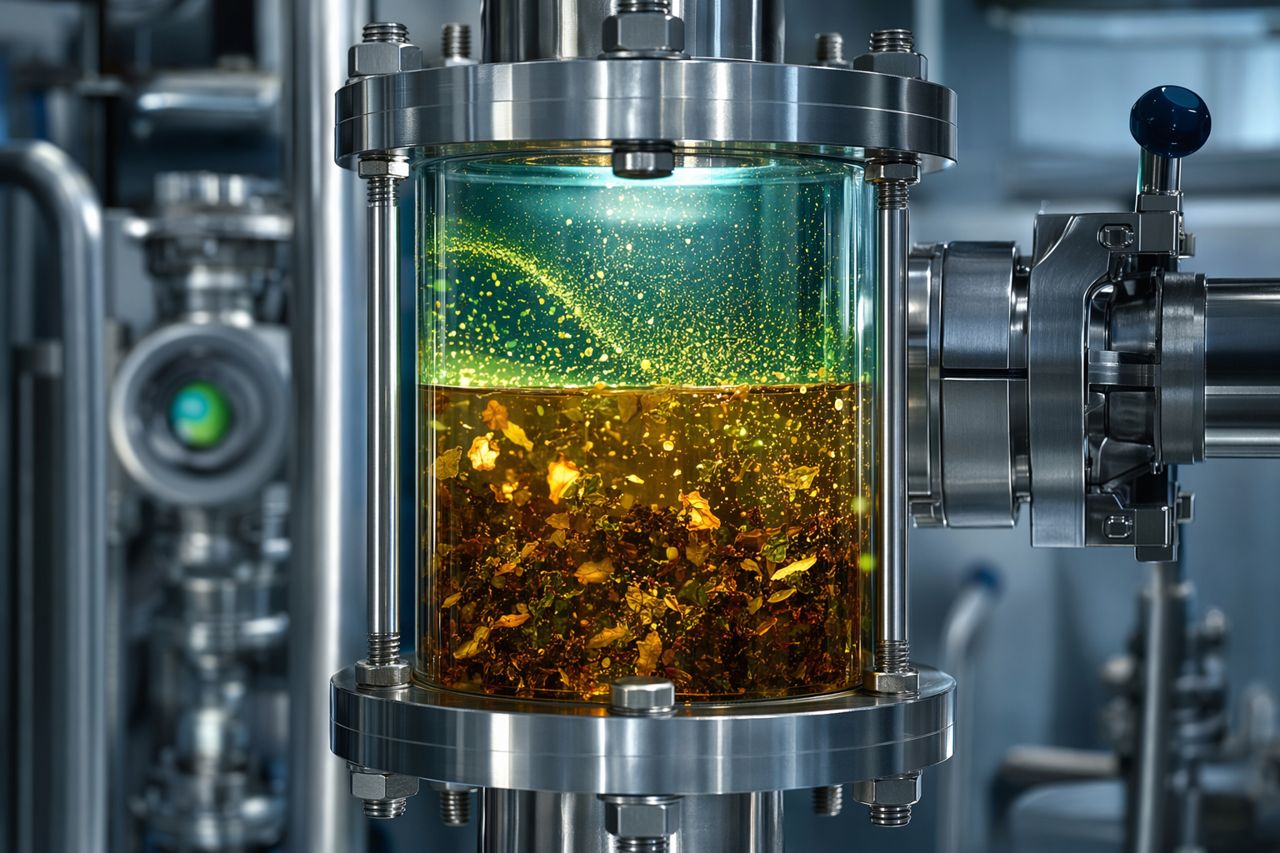
A focused enzyme system can help open plant cell structures, release soluble components, and improve extract recovery. The goal is not maximum breakdown at all costs. The goal is a beverage extract that is easier to separate, blend, stabilize, and fill.
Use enzymes to target:
- More complete soluble extraction
- Lower press cake or spent botanical retention
- Reduced slurry viscosity
- Faster tank turnover
- More predictable extract strength
- Improved process economics per kilogram of input
Plant question: Are you optimizing extraction yield alone, or extraction yield plus separation speed and final beverage appearance?
4. Separation: remove the right solids at the right time
Separation performance determines whether the beverage line feels controlled or reactive. Centrifuges, decanters, screens, filters, and settling tanks all perform better when the liquid phase is predictable.
Watch for
- Slow phase separation
- Floating fines or persistent colloidal haze
- Filter blinding
- High pressure differential rise
- Inconsistent sediment after hold
- Excess carryover into blend tanks
- Over-clarification that strips desired body or color
Enzyme selection logic
For fruit and botanical beverages, pectin, hemicellulose, starch fragments, and plant gums can hold particles in suspension. Enzymes can reduce this structural drag, making separation faster and more repeatable.
The commercial benefit is straightforward:
- Less rework
- Shorter clarification windows
- Better utilization of filters and centrifuges
- Lower risk of sediment complaints
- Improved schedule confidence before blending and filling
5. Blending: protect formulation repeatability
Blending is where extract variability becomes a finished beverage risk. Sweeteners, acids, flavors, minerals, proteins, fibers, caffeine, vitamins, adaptogens, and colors can all interact with the base liquid.
Blend tank checklist
- Confirm extract brix and dilution target
- Confirm pH before adding sensitive functional ingredients
- Add high-impact ingredients in a controlled sequence
- Monitor viscosity after fiber, protein, or hydrocolloid addition
- Check turbidity before and after acidification
- Validate color stability under expected hold conditions
- Record mixing time and recirculation conditions
Enzymes and mouthfeel control
Enzymes can help reduce unwanted thickness from fruit pectin, botanical gums, or starch-like components, but they must be matched to the desired sensory profile. A premium RTD beverage should not feel watery because the process solved viscosity too aggressively.
BrixPilot’s practical approach is to define the intended mouthfeel first, then tune the enzyme strategy around that target.
6. Thermal process compatibility
Pasteurization, hot fill, tunnel pasteurization, and aseptic processing can change haze, color, flavor, and mouthfeel. Heat may also reveal instability that looked acceptable in a cold bench sample.
Thermal process checklist
- Confirm enzyme treatment is complete before the thermal step
- Evaluate haze before and after heating
- Track color shift in botanicals and fruit systems
- Check sediment formation after cooling
- Confirm viscosity after thermal exposure
- Validate sensory impact after process simulation
- Confirm the finished beverage remains within specification through shelf-life testing
Factory value
A strong enzyme program reduces surprises before the thermal step. When viscosity, suspended solids, and extract composition are under control, the plant can run with fewer stoppages and less last-minute adjustment.
7. Filling line readiness
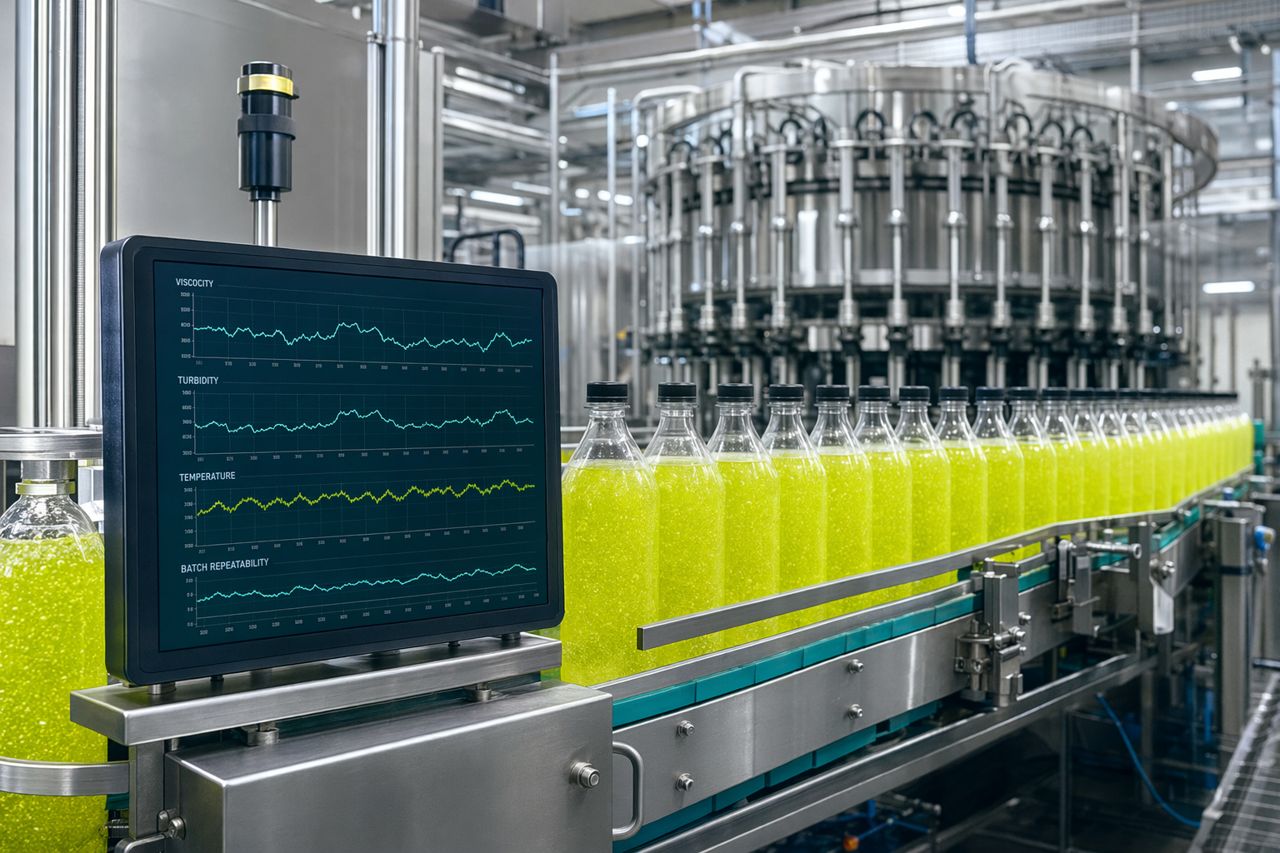
A beverage that passes the blend tank can still challenge the filler. Viscosity, foam, suspended solids, and temperature variation can affect fill accuracy and line speed.
Filling checklist
- Confirm final viscosity range for the filler
- Check visible particles against nozzle and valve tolerance
- Monitor foam behavior during transfer
- Confirm carbonation compatibility if applicable
- Check bottle, can, or carton appearance after filling
- Confirm sediment behavior after agitation and rest
- Track filler downtime linked to beverage physical properties
Where process enzymes show up on the P&L
Enzyme decisions affect more than the batch sheet. They influence line efficiency, labor, filtration performance, rework, hold time, and customer complaints. The best enzyme program pays back by making production less fragile.
8. QA release and shelf-life checks
Functional beverages can drift over time. Some issues appear immediately; others emerge after heat exposure, distribution vibration, or cold storage.
Finished beverage checks
- Brix
- pH
- Turbidity
- Viscosity or flow behavior
- Color
- Sediment after rest
- Flavor and aroma
- Package appearance
- Microbiological release criteria
- Accelerated and real-time shelf-life observations
Enzyme-related documentation
Maintain a clean production record:
- Enzyme product identity and lot number
- Addition point
- Process temperature and pH at addition
- Contact time
- Mixing condition
- Stop or inactivation step, when applicable
- Observed effect on viscosity, clarity, yield, or separation
- Deviations and corrective actions
Good documentation helps R&D transfer successful trials into production without depending on memory or operator interpretation.
9. Pilot-to-plant transfer checklist
Before committing a functional beverage to full production, confirm that the enzyme strategy scales with the equipment.
Ask before scale-up
- Is the enzyme added where mixing is strong enough?
- Does the plant have enough hold time at the required process condition?
- Does the enzyme solve the main bottleneck or create a new one downstream?
- Are separation targets realistic with the selected equipment?
- Does the finished beverage retain the intended mouthfeel?
- Is the thermal process compatible with the treated liquid?
- Can QA measure the production outcome clearly and quickly?
- Can operators execute the process without special handling complexity?
The BrixPilot standard
We look for the shortest reliable path from ingredient variability to finished beverage repeatability. That means matching enzyme selection to the factory constraint, not forcing a generic enzyme into every formulation.
10. Common plant scenarios
Cloudy botanical tea with slow filtration
Likely process focus: plant cell wall material, fine suspended solids, pectin-like structures, and extraction conditions.
Potential enzyme outcome: improved separation, lower turbidity, reduced filter loading, and more stable appearance.
Fruit-forward functional beverage with heavy body
Likely process focus: pectin-driven viscosity, pulp behavior, and heat stability.
Potential enzyme outcome: smoother mouthfeel, controlled viscosity, improved filler performance, and less sediment risk.
Grain or oat-adjacent beverage base
Likely process focus: starch fragments, beta-glucan-like viscosity contribution, and suspended solids.
Potential enzyme outcome: lower viscosity, improved processing flow, cleaner separation, and more consistent texture.
Botanical extract with low recovery
Likely process focus: cell wall access, hydration, extraction profile, and spent solid retention.
Potential enzyme outcome: higher soluble recovery, better extract strength, and improved raw material economics.
Request a quote for your RTD process
If your plant is scaling a functional beverage and needs better clarity, extraction yield, viscosity control, or line efficiency, BrixPilot can help define an enzyme approach around your actual process conditions.
Send your beverage type, ingredient base, current bottleneck, target outcome, and production stage through the on-site request form.
Request a quote