Botanical Beverage Extraction: How Plants, Particle Size, Heat and Time Change Yield
Botanical beverages look simple in the bottle. In production, extraction is a control problem: plant structure, particle size, water chemistry, heat profile, hold time, shear, and filtration all decide how much soluble material reaches the tank — and how predictable the finished drink feels on the line.
For an RTD beverage factory, the goal is not just more extract. The goal is usable extract: clean color, controlled mouthfeel, stable clarity, manageable viscosity, and repeatable formulation cost.
BrixPilot works as an enzyme supplier for beverage manufacturing teams that need practical process gains in botanical, fruit, tea, coffee, functional, and hybrid RTD formats.
Why botanical extraction yield is rarely one variable
Two botanicals can behave completely differently under the same extraction recipe. A chopped root, a dried flower, a powdered leaf, and a seed-rich botanical all release solids through different physical pathways.
Key differences include:
- Cell wall structure: Fibrous roots and stems usually need more process help than delicate petals or leaves.
- Natural pectin and hemicellulose load: Higher structural polysaccharides can increase viscosity and slow filtration.
- Oil, resin, and wax content: Some botanicals contribute flavor but also create separation or haze risk.
- Native pigment behavior: Anthocyanins, chlorophylls, polyphenols, and caramelized notes respond differently to pH and heat.
- Particle hydration rate: Dry, dense particles can take longer to wet and release soluble material.
The extraction target should be defined before the trial starts: maximum soluble yield, bright top-note capture, deeper body, low haze, lighter color, or easier filtration. Those targets can require different process conditions.
Particle size: smaller is not always better
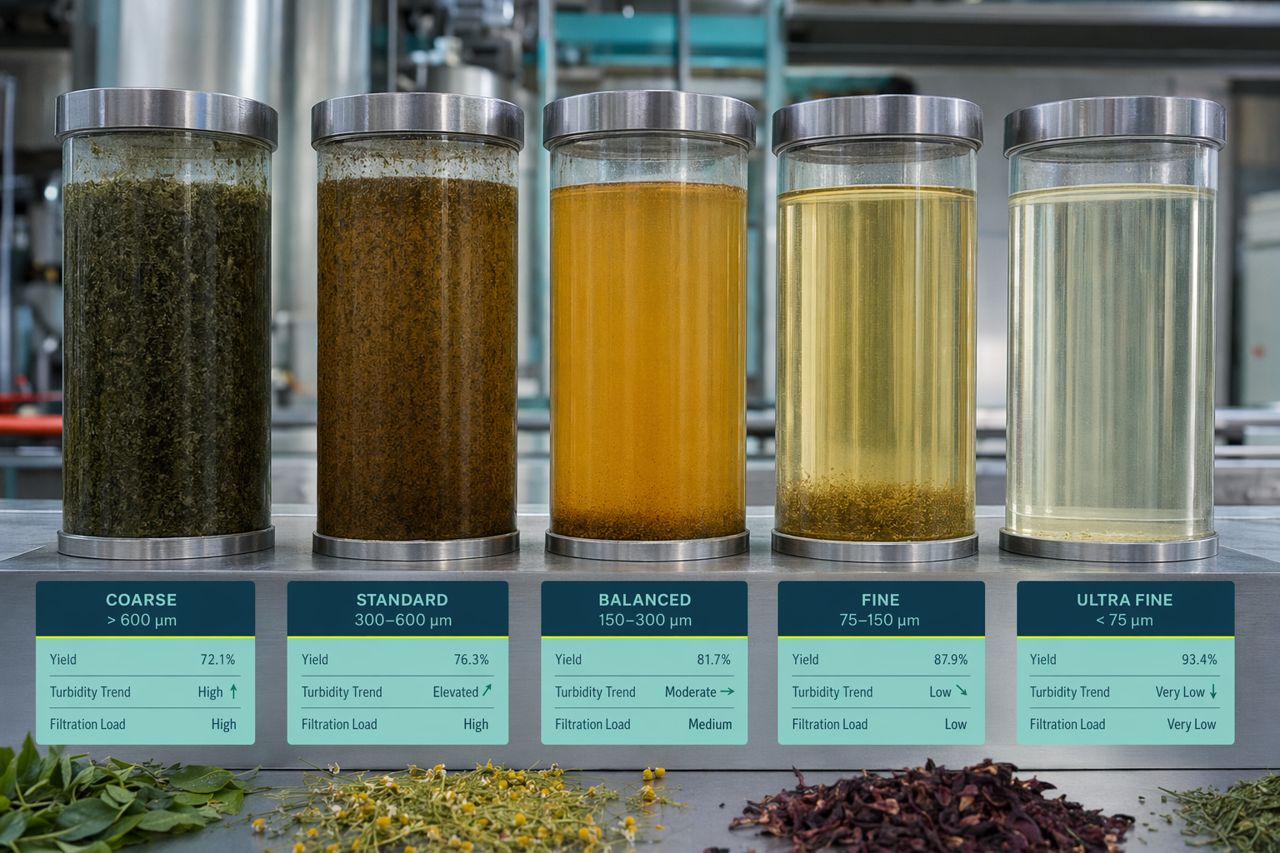
Reducing particle size increases surface area, which can accelerate extraction. But fine grinding can also create operational drag.
What smaller particles can improve
- Faster hydration
- Higher soluble release in shorter cycles
- Stronger flavor intensity at lower botanical dosage
- Better utilization of expensive functional ingredients
What smaller particles can make worse
- Higher suspended solids
- Slower decanting or centrifuge performance
- Filter blinding
- Increased sludge volume
- More astringency or grassy notes
- Batch-to-batch variation if milling is inconsistent
For RTD production, the best particle size is usually the one that improves extraction without overloading downstream clarification. Yield that cannot pass through the line becomes waste, rework, or downtime.
Heat: extraction accelerator or quality risk
Heat speeds diffusion and softens plant tissue. It can also change color, drive off volatile aromatics, intensify bitterness, or set haze-forming interactions.
Higher-temperature extraction may help when:
- The botanical is dense, woody, or root-based
- The flavor target is deep, roasted, earthy, or concentrated
- The process needs shorter tank occupancy
- Microbial risk needs tighter control before blending
Lower-temperature extraction may help when:
- Floral or green top notes matter
- Color brightness is a critical attribute
- Polyphenol harshness must be controlled
- The formula contains heat-sensitive functional components
Heat should be treated as a yield lever and a sensory lever. A hotter process can raise soluble extraction while reducing the premium cues a consumer expects from botanical RTD beverages.
Time: more holding time can create diminishing returns
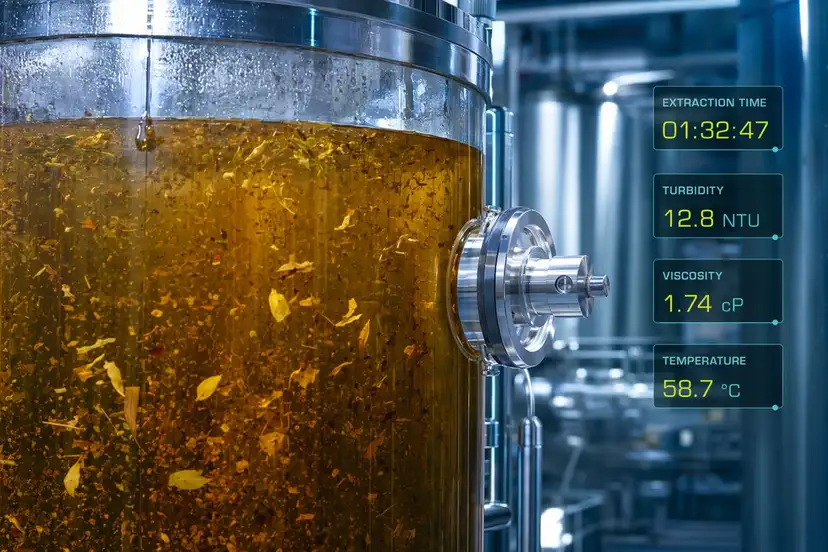
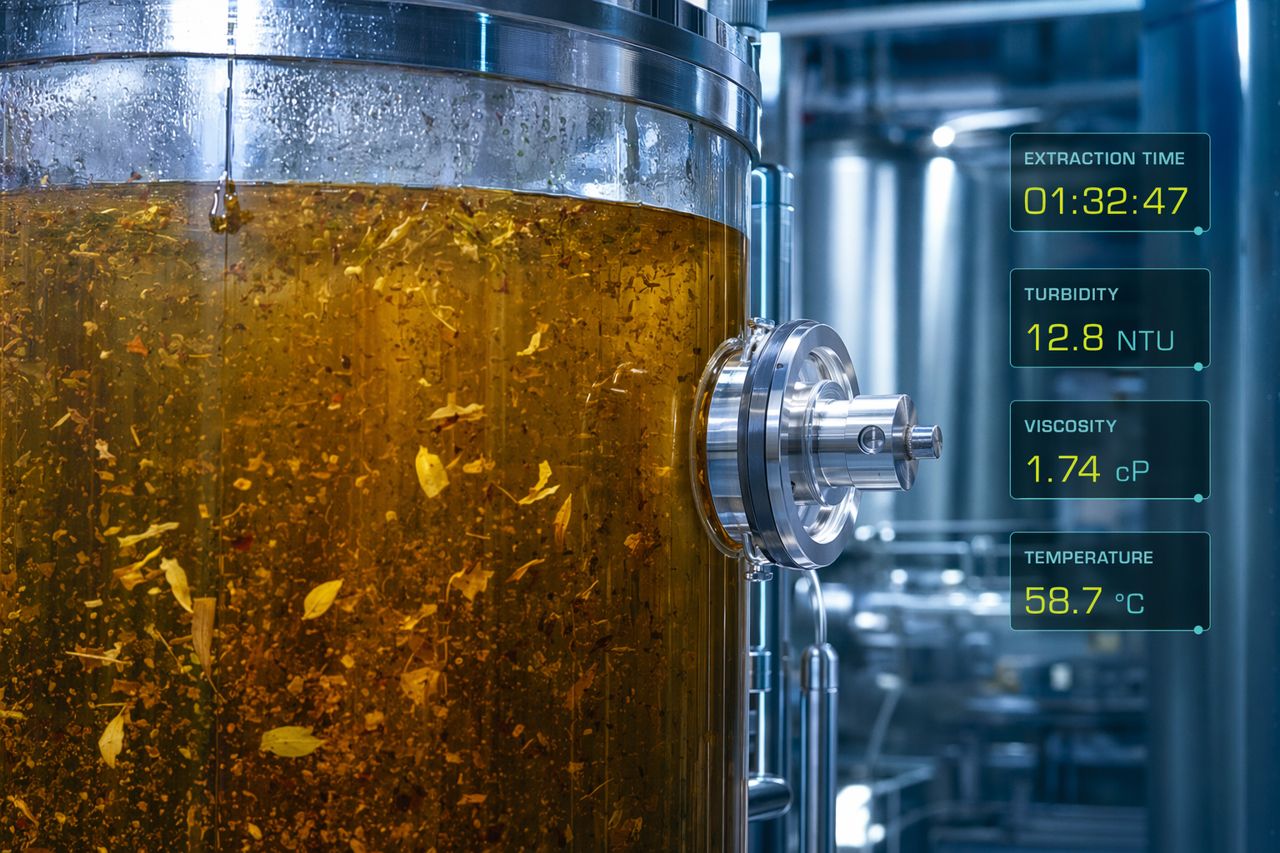
Extraction curves are not linear. The first stage often releases readily soluble compounds quickly. Later stages may extract more structural material, bitterness, color bodies, or haze precursors.
A practical plant trial should track:
- Soluble solids over time
- Turbidity movement
- Viscosity shift
- Filterability
- Color drift
- Sensory intensity and astringency
- Sludge volume after separation
If the last portion of holding time adds little target flavor but increases haze or filtration load, the process is not gaining value. It is consuming capacity.
Where enzymes fit in botanical RTD extraction
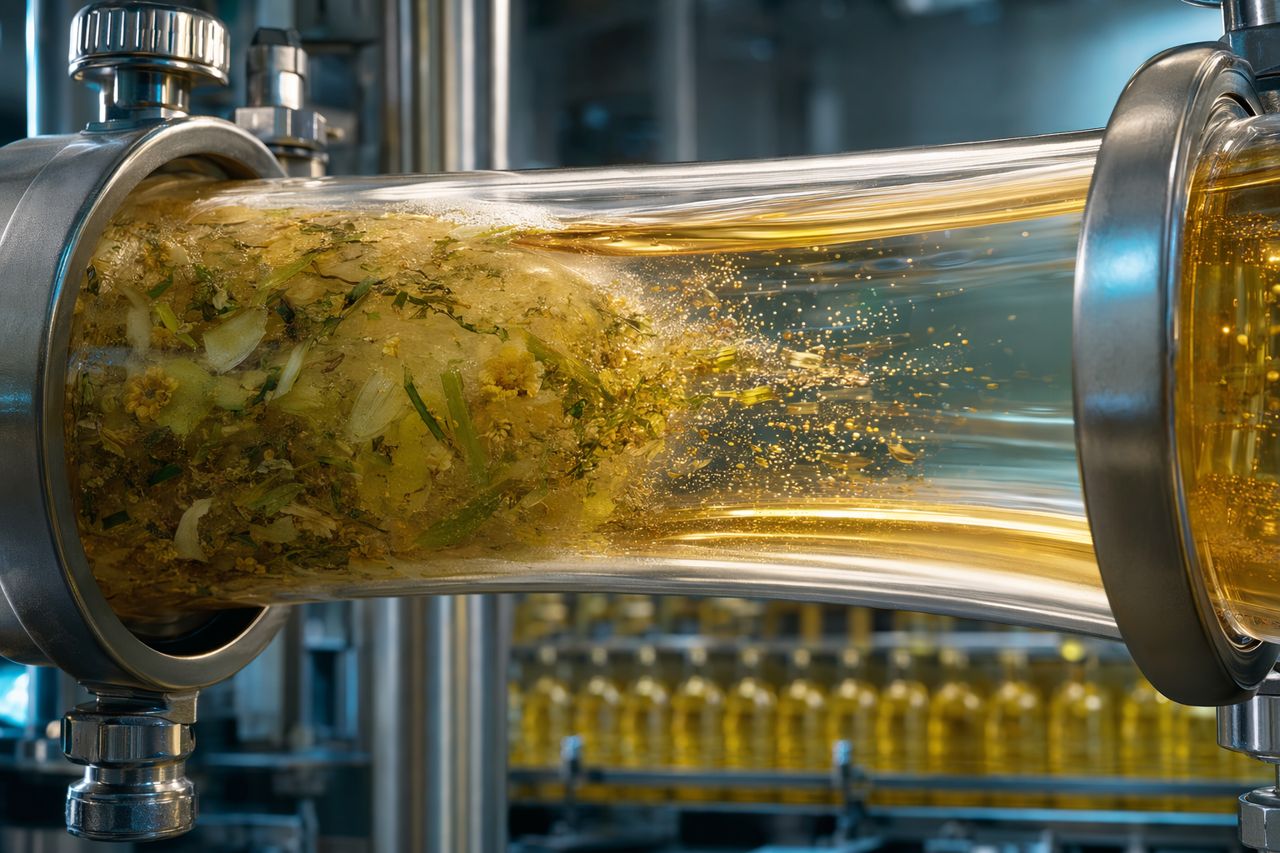
Enzymes can help unlock plant material without forcing the factory to rely only on heat, long holds, or aggressive milling. In botanical beverage extraction, enzyme selection is typically aimed at plant cell wall modification, viscosity reduction, pectin management, clarification support, or improved soluble release.
Commercial outcomes can include:
- Higher extract utilization from the same botanical input
- Lower viscosity before separation or filtration
- Cleaner clarification with reduced solids carryover
- Improved color and flavor release in controlled conditions
- Shorter extraction windows where the process allows
- Better formulation repeatability across botanical lots
The enzyme decision should be matched to the plant matrix and the finished beverage specification. A tea-forward drink, a cloudy functional shot, and a clear botanical water do not need the same process result.
Build extraction trials around plant behavior, not assumptions
A useful trial matrix does not need to be large. It needs to isolate the variables that drive plant behavior and factory performance.
Recommended trial variables
- Botanical cut size: coarse, standard, fine, or supplier-specific grades
- Hydration sequence: direct addition, pre-wet, recirculated wet-out, or staged loading
- Temperature profile: low, moderate, elevated, or stepwise
- Hold time: enough points to identify the extraction curve, not just one endpoint
- Agitation and shear: sufficient suspension without over-fragmenting particles
- Enzyme support: targeted to viscosity, cell wall release, pectin control, or clarification needs
- Separation method: screen, decanter, centrifuge, membrane, depth filtration, or hybrid setup
Measurements that matter to production
- Extract yield relative to botanical cost
- Turbidity before and after separation
- Viscosity at transfer and filtration temperature
- Line speed impact
- Filter life or separation load
- Color consistency
- Sensory match to target profile
- Sediment risk after filling
The winning condition is not simply the highest yield number. It is the best total balance of yield, clarity, mouthfeel, processing speed, and finished beverage stability.
Common extraction mistakes in botanical RTD development
Over-milling to chase yield
Fine particles may increase short-term extraction but create long-term clarification problems. If filtration slows or solids losses rise, the net yield gain can disappear.
Using heat as the only tool
Heat is powerful, but it can flatten aromatics and change polyphenol behavior. For premium botanical positioning, the sensory cost of heat must be measured.
Extending hold time without checking the curve
Longer extraction can pull more unwanted material than value. Monitor the process at intervals instead of treating time as a fixed recipe.
Ignoring botanical lot variation
Different harvests, drying methods, cut sizes, and storage conditions change extraction. Repeatability requires incoming material standards and process flexibility.
Treating enzymes as a generic add-on
Enzyme support should be selected for a defined production outcome: lower viscosity, better release, improved clarification, or more consistent transfer behavior.
Practical process targets for RTD beverage plants
A botanical extraction process should be judged by how it runs through the factory and how it performs in the bottle.
Target outcomes include:
- Clarity control: reduce haze risk when the beverage format requires brightness.
- Mouthfeel control: avoid over-extraction of heavy, gummy, or drying components.
- Viscosity reduction: improve pumping, blending, separation, and filtration behavior.
- Extraction yield: use botanical inputs more efficiently without sacrificing sensory quality.
- Line efficiency: reduce bottlenecks at tanks, separators, filters, or blend points.
- Formulation repeatability: keep the same sensory and analytical profile across production lots.
BrixPilot view: extract more of what you want, less of what slows the line
Botanical extraction is not about forcing plants to give up everything. It is about directing the process toward the compounds that support the beverage concept while keeping solids, haze, viscosity, and bitterness under control.
For R&D managers and plant teams, the right enzyme strategy can turn extraction from a variable kitchen-style step into a controlled manufacturing process.
Request a quote
Planning a botanical RTD, functional water, tea hybrid, coffee botanical blend, or premium flavored beverage? Share your plant matrix, target claim, clarity goal, separation method, and current bottleneck through the on-site request a quote form. BrixPilot will help identify an enzyme direction for pilot trials and production scale-up.